


The Executive Director's Fundraising Trap

I have spent much of my life around nonprofit leaders. Some are leading pregnancy centers. Some are running foster care ministries. Others are serving through churches, schools, rescue missions, or community organizations. No matter the mission, I often hear a similar story: "We are so busy serving people that we don't have time to fundraise."
I understand that feeling because I've lived it myself. Most executive directors didn't step into nonprofit leadership because they dreamed of asking people for money. They stepped into leadership because they cared deeply about a cause. They wanted to help children, strengthen families, share the gospel, feed the hungry, or make a difference in their community.
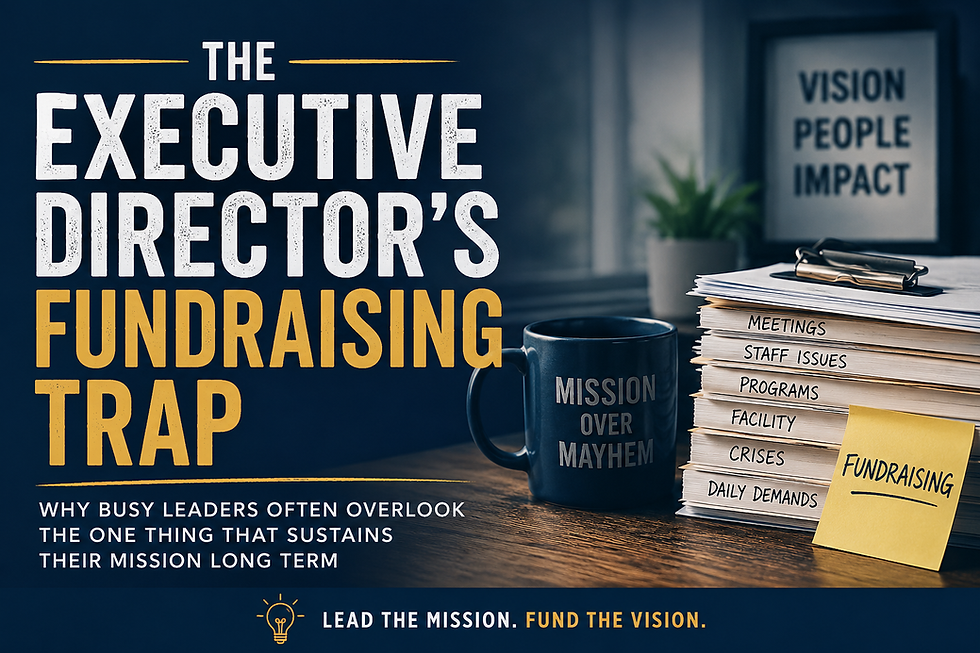
Then reality arrived. The phone started ringing. Staff needed direction. Facilities needed attention. Programs needed oversight. Crises showed up unannounced. Before long, every day felt completely full. The mission was moving forward, but fundraising kept getting pushed to tomorrow. And tomorrow has a way of turning into next month.
One of the greatest challenges facing executive directors today is that urgent responsibilities often crowd out important responsibilities. Most nonprofit leaders have no shortage of work to do. The question becomes whether they are spending enough time on the activities that sustain the mission for the long term.
Fundraising lives in that category.
Every ministry has bills to pay. Every organization has programs to operate. Every vision requires resources. Someone must tell the story, build relationships, inspire generosity, and invite people to participate in the mission. More often than not, that responsibility belongs to the executive director.
No one can communicate the vision quite like the leader. No one understands the mission more deeply. No one has a better opportunity to connect donors with the impact of the organization. Donors are not simply investing in a budget. They are investing in leadership. They want confidence that the organization is being led well. They want to hear the passion behind the mission. They want to know where the ministry is headed and how their generosity can help move it forward.
That is why an executive director's involvement in fundraising matters so much.
Over the years, I have watched organizations experience remarkable growth when leaders intentionally prioritized donor relationships. They made time for lunches and coffee meetings. They picked up the phone to thank supporters. They shared stories of lives being changed. They visited donors in their homes and offices. They spent time talking about the future instead of only managing the present.
Those activities may never feel as urgent as the crisis of the day, but they often have a far greater impact on the future of the organization. Every meaningful donor relationship started with a conversation. Every major gift began with trust. Every long term supporter first needed to understand the vision.
One of the healthiest shifts an executive director can make is viewing fundraising as an extension of the mission itself. When a donor gives, they become part of the work. Their generosity helps provide services, change lives, and advance the organization's purpose. Inviting someone into that opportunity is one of the most important conversations a leader can have.
Some of the most generous supporters I have ever met were simply waiting to be asked. They wanted to make a difference. They wanted to invest in something meaningful. They wanted to be part of a story larger than themselves. They simply needed someone to show them how.
As organizations grow, executive directors can delegate many responsibilities. Staff members can manage programs. Volunteers can assist with events. Committees can help carry projects forward. Yet one responsibility always remains close to the heart of leadership: vision casting.
People follow vision. Donors invest in vision. Organizations grow through vision.
The executive directors who thrive over the long term understand this. They protect time for relationship building. They stay connected to supporters. They consistently communicate impact. They keep telling the story of what God is doing through their ministry. They understand that fundraising is not a distraction from leadership. It is one of the most important expressions of leadership.
The daily demands of nonprofit work will never disappear. There will always be meetings to attend, emails to answer, and problems to solve. But leaders who intentionally invest in donor relationships often discover something remarkable. They spend less time worrying about resources because they have spent more time cultivating the relationships that provide them.
And that creates the freedom to focus on what they were called to do in the first place: lead the mission forward.


Comments